Indian Curry vs Thai Curry: Key Differences
In the world of culinary delights, there's a diverse spectrum of dishes, and among them, curry holds a prominent place. This flavourful concoction isn't just confined to Indian cuisine; it's also a star player in Thai culinary repertoire. While curry serves as a convenient umbrella term for these delectable creations, the devil lies in the details. Picture this: a savory, possibly fiery, sauce embracing a medley of vegetables or meats, harmonizing with rice or noodles. Yet not all curries are created equal. To truly savor the nuances of this culinary art, one must delve into the intricacies of Indian versus Thai curry. So, what is the difference between Indian and Thai curry? Unraveling this mystery could well shape your next gastronomic adventure.
A Tale of Two Curries
I will admit that I used to be a picky eater. In fact it wasn’t until 2012-ish that I had even tried a dish with a Curry base – Butter Chicken – and even then it wasn’t until 2014 that I tried curry as a spicy, saucy dish with veggies, meat, and rice. I tell you, trying a slightly spicy red curry became an addiction. The heat, your face getting a little red, the burn on your tongue, slight sweating, it becomes an obsession. One thing I can almost guarantee about a homemade Curry, whether it is Indian Curry or Thai Curry, is that they are never exactly the same twice. Learn more about the experience and excitement of eating spicy foods.
Thai Curry is all about the aromatic curry paste. It is the beginning of something that is invariably magical. It is an intense, thick, moist, blend of aromatic ingredients. All curry paste is made with the same or fairly similar base ingredients - hot chillies, lemon grass, ginger, garlic, shallot, shrimp paste and dry herbs like cumin, coriander seeds, and turmeric.

Thai Chicken Meatballs
Spicy and delightful, these easy Thai-Style Chicken Meatballs will tickle your family’s tastebuds.
There are two rules to an otherwise free-form art of making curry paste:
- Any Thai Curry chef worth their weight in curry paste makes their own
- You must use a mortar and pestle to make curry paste. The reason being that crushing and grinding releases essential oils which are fragrant and flavourful.
Otherwise, the sky is the limit when it comes to creating such delightful, tingling tastes. By varying the proportions of the ingredients, or the way those ingredients are prepared, you will find yourself with different variations of curry, too numerous to count.
Cook With All the Colours of the Curry
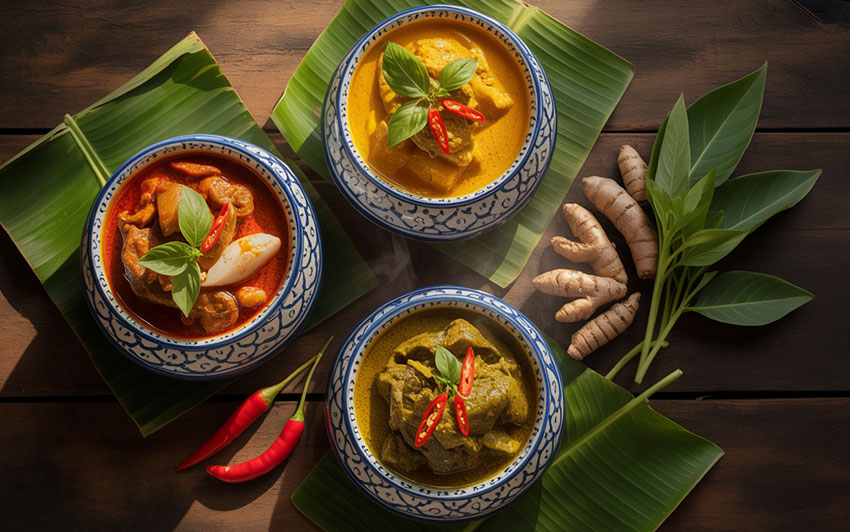
Thai Curry comes in different colours, and each colour has a different flavour profile, and are used for specific dishes. Thai Curry tends to be more soup-like than thick and stew-like, however, that is dependent on the cook, and the amount of coconut milk used in the dish.
Red
Red Curry is an every-curry paste – it’s perfect for just about anything. It is bold with a mild spiciness. It’s a good starting point if you aren’t afraid of spice. The deep, rich flavour and colour comes from the red chillies that are used to make this paste.
Yellow
Yellow Curry Paste is used for light meats like poultry and seafood, as well as vegetarian curries. It gets the bright yellow colour from the yellow peppers and an abundance of turmeric, which makes it sweet and mellow.
Green
Fresh and bright green chillies give Green Curry the bright colour and spicy, in-your-face kick. Curries made with Green Curry Paste are sharp, hot, and not as rich or deep as the other two.
Indian Curry is Naan-Stop Deliciousness
Curry originated from the word Kari, which is a spice blend that was brought to the rest of the world by British traders from the British East India Trading Co. in the mid-17th century. The spices were pre-mixed and ground before being traded to the British for export, however, you will not find what we know as Curry Powder in India. Coriander, turmeric, cumin, fenugreek, and powdered chilli peppers are the basis for Indian Curry Powder. These elements are toasted and hand-blended by a chef in India, where a wide range of additional spices may be added depending on where in India the curry is being made, and what other ingredients are going in the dish.
The British East India Trading Co. is also credited with introducing the chillies that originated in Mexico and South America to the Asiatic countries. They were then added to curry and became a phenomenon that spread across the continent.

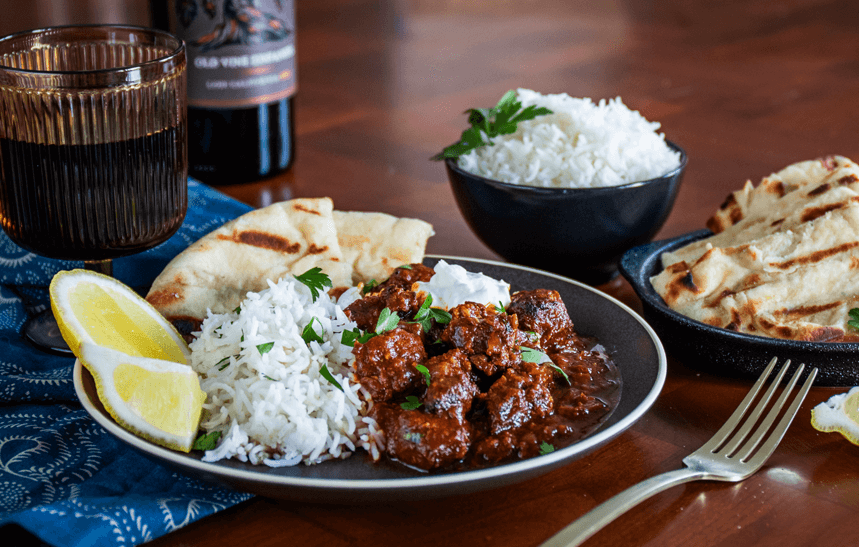
Kashmiri-Style Rogan Josh
This northern Indian-style curry called Rogan Josh is filled with warming spices, BBQed lamb, and served atop fluffy and fragrant basmati rice.
Keep Calm and Curry On
There is evidence of curries as far back as 4000 years found in the Indus Valley of India. Traces of cooked ginger, and turmeric were found in a cooking pot and on rice grains in that area. The pairing of these specific spices with rice makes curry the longest continuously prepared dish in the history of ever.
As opposed to Thai Curry, Indian Curry has a flavour and spice that lingers on the palette, in contrast to the one-two-punch found in Green Curry Paste. Curry dishes are thickened mostly with dal, a purée of chickpeas or other lentils, and because it’s a powder, custom-mixed by the chef, it can use oil, ghee, or yogurt to provide added moisture. Indian Curry doesn’t have colours to denote the type of curry being prepared, but use the base spices, which are then mixed with other spices and ingredients for specific types of dishes. The most popular being:
Korma
Yellow in colour, filled with almond and coconut powder, is mild in flavour.
Madras
Is your standard hot curry, found in most restaurants, can range in heat depending on the chef and your preference, has a bit of a sour note to it.
Pasanda
Predominantly found in the UK, it is a mild sauce made with cream and coconut milk. This rich saucy stew is served with almonds and cashews, lamb, chicken or prawns.

Butter Chicken Parmesan
A mashup of the classic tastes of butter chicken combined with the satisfying crunch of breaded chicken topped with gooey, melted cheese.
Japanese Curry
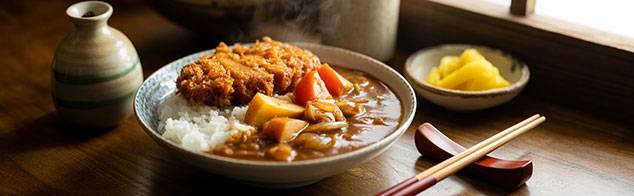
Thick and rich, this brown stew, Japanese Kare, is generally filled with carrots, onion, and potatoes. Imported as Indian Curry in the Meji Period of 1868 to 1912, this delicious meal was adapted to suit the taste of surrounding area. Beef and pork are usually the main protein, however, the deep-fried pork cutlet, or Katsu, is sometimes served atop the stew and rice.
Can’t Stand the Heat? Stay out of the Curry
Just because you ordered a colour of Thai Curry, doesn’t mean that it’s going to be mild, medium, or spicy. The base ingredients, the curry chef, and what it’s served with play huge roles in how hot your Curry will actually be. How many fresh, hot chilies are used, how much paste is used, how much coconut milk is used, and what veggies are added to the curry, all play pivotal parts in the spiciness of the curry. Those that are water-based tend to be hotter because there is no fat from coconut milk or cream to help offset the heat. Serving spicy curry with rice, preferably hot curry over room temperature rice, will help when your curry is on the spicy side. You can also add yogurt-based dips and sauces to help as well. Don’t forget to add a squeeze of lime.
Vindaloo Curry
This Vindaloo Curry recipe calls for goat, but stewing beef or lamb will do just as nicely. It’s spicy, but beautifully cooled with the addition of the yogurt.

Beef Chuck Curry
Thai-Style curry that is rich and creamy, and adding a thorough squeeze of lime and topping it with crispy fried onions takes the whole dish to new heights of deliciousness.
People Also Asked:
What is the difference between Thai and Indian Curry?
Indian curry is not the same as Thai curry. While both are delicious and share similarities in terms of being saucy dishes with vegetables or meats, they differ in their use of spices, ingredients, and flavour profiles.
How do Thai and Indian Curries Differ in Ingredients, Flavours, and Preparation?
The difference between Thai and Indian food lies in several aspects. Indian cuisine typically features a wide array of spices such as cumin, coriander, and turmeric, resulting in rich, complex flavours. It often includes dishes like curry, biryani, and tandoori. On the other hand, Thai cuisine incorporates ingredients like lemongrass, galangal, and Thai basil, creating vibrant and aromatic dishes such as pad thai, green curry, and tom yum soup.
Are Curry Powder and Curry Paste Interchangeable?
Curry powder is generally associated with Indian cuisine. It is a blend of various spices such as coriander, cumin, turmeric, and chilli powder, commonly used in Indian curry dishes. Thai cuisine typically uses fresh herbs and pastes rather than pre-made curry powder.
Do all Thai Curries Contain Coconut Milk?
Not all Thai curries contain coconut milk, but many do. Coconut milk adds richness and creaminess to the curry while also tempering the heat from spices. Thai curries like red curry, green curry, and yellow curry often include coconut milk in their recipes, though there are variations that may omit it or use other ingredients for creaminess.
Spice Things Up: Two Curries, One Delicious Journey
Now that we have Curry-ed your flavour with this article, will you be trying these two very different cuisines? Just remember safety first when working with any spicy peppers. Keep up to date with recipes, how-to’s and other BBQing interests by watching our Facebook and Instagram pages.