
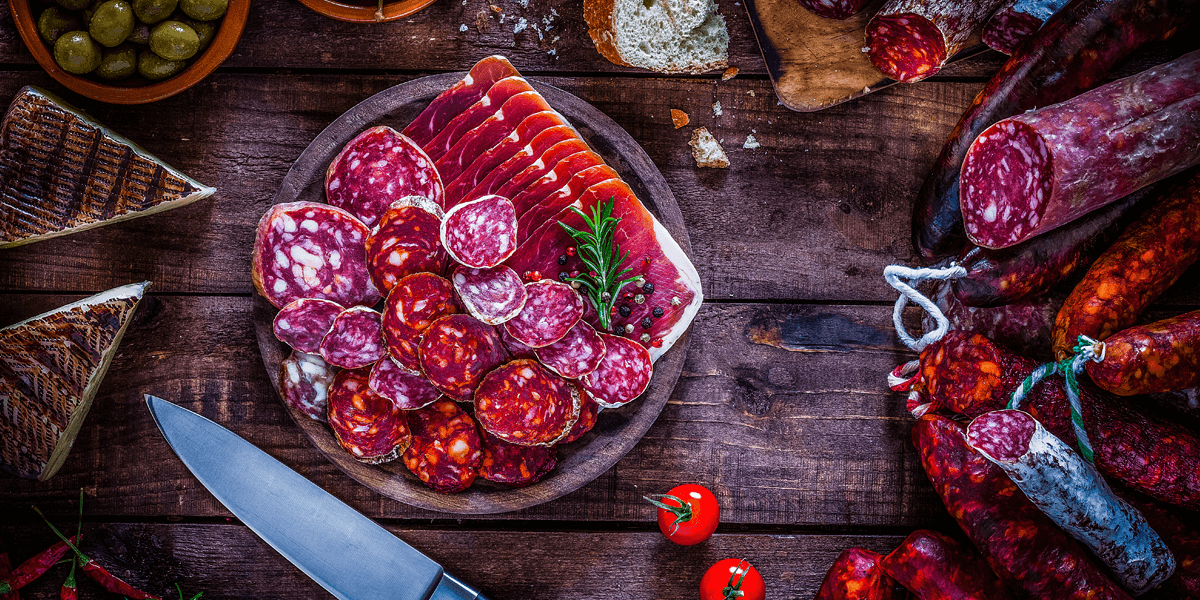
The Science of BBQ - Curing Meat
There is nothing like the deep satisfaction when you make your own food from scratch. Making your own bacon, pastrami, pancetta, or salt fish can be rewarding. It is a challenging and time-consuming process, but the risk is worth the reward. With total control over the ingredients you use, why not try this age-old tradition? This is Napoleon’s Guide to Curing Meat. Read on to learn the science behind the process and how you can keep things safe and delicious.
What is Curing?
Curing is the process of preserving meat using salt, sometimes smoke, and other preservatives to extend shelf life and develop deep, complex flavours. By drawing out moisture through osmosis, curing prevents harmful bacteria from proliferating, making your meats not only safe to eat but also incredibly tasty. Whether you’re after that perfect pastrami or a rich, smoky bacon, curing is the secret sauce.

Choosing the Right Salt
Not all salts are created equal when it comes to curing. Here’s what you need to know:
Prague Powder #1 (Insta-Cure #1)
The go-to for home curing. It’s 94% salt and 6% sodium nitrite, perfect for preserving meats safely. This product is also known as Insta-Cure 1, or pink curing salt, thanks to the pink dye, which allows you to differentiate it from the regular salt and sugar in your pantry. You won’t likely find this on grocery store shelves, however, you can usually get Prague Powder #1 at your butcher, sporting goods stores, and online.

Prague Powder #2 (Insta Cure #2)
Known as Insta Cure 2 or Pink Curing Salt 2, this product contains 4% nitrate, which will break down into nitrites over time, used for longer cures like dry-aged hams.
Morton Tender Quick
A mix of sodium nitrite and sodium nitrate, best used exactly as recipes specify. This product is not a tenderizer and should only be used when called for in the specific ratios.
Saltpeter (Potassium Nitrate)
Rarely used today, but historically important for killing bacteria like botulism thanks to the potassium nitrate within. Saltpeter is very rarely used today as there are many safer cures commercially available.

Never Substitute One Curing Salt for Another!
Most recipes you find are precisely formulated for safety and taste. Changing the cure called for in your recipe could create disastrous results and even make you sick. While salt and vinegar do inhibit bacterial growth, they do not kill Botulism. You should not attempt to cure at home without the use of the curing salt specified within that particular recipe.

Nitrates and Nitrites
Nitrates and nitrites are largely considered bad for you. This is due, in large part, to a study performed in the 70’s which was very similar to the - now debunked - MSG study. The World Health Organization has stated that there are no associations to cancer caused by consuming both nitrates and nitrites, and in a balanced diet filled with fruits and vegetables, we derive more nitrates and nitrites from foods like spinach. Learn more about MSG in our article about Building Umami in your Cooking.
Curing Methods
Different methods yield different textures, flavours, and difficulty levels. Let’s break them down:
Injection Curing
This is best left to the pros. While quick and cost-effective when scaled up to commercial levels, this process dilutes the meat’s natural flavours, provides no surface flavours, and can be difficult to do safely at home.

Dry Curing
This is the ultimate challenge and should be left to experienced professionals. The meat is rubbed with precise amounts of salt and seasonings, then stored in a temperature- and humidity-controlled space for weeks or months. The reward? Luxurious prosciutto, pancetta, or Serrano ham. Some molds may be introduced and beneficial, while others can be deadly and destroy all of the hard work put into the final product. If you don’t know the difference, it can be deadly. After a dry cure, before final processing is done – smoking or other such procedures – the cure will either be rinsed off the meat or it will be soaked.
Dry curing is not the same as dry brining. Meats and other foods will not need to be rinsed as the salt in this process A) lacks the curing salt to preserve it, and B) the amount of salt involved should be only enough to enhance the flavour of the food without making it overly salty. These processes are, chemically, different as well.
Wet Curing
One of the easiest and most reliable methods for home curing. Meat is submerged in a seasoned saltwater solution, which includes curing salts, allowing flavours to penetrate deeply over time. As the salt and nitrite penetrate into the meat, the nitrite breaks down into nitric oxide (NO) and binds to the iron in the myoglobin creating the pink colour in a similar fashion to when smoke causes the pink ring. This process takes up a lot of space in your fridge, as the meat must be fully submerged. It works well because the salinity of the water wants to reach equilibrium within the meat. This draws in moisture and the salt molecules with it in a process that is very similar to wet brining; however, it is left for much longer, and the salt concentration is much higher. Although this is a wet process, the meat, once cured, will require rinsing before further processing like smoking.

Equilibrium Curing
A great option for home curing, this method uses precise salt ratios in a rub or brine, then is sealed and refrigerated. It ensures balanced seasoning and safety. If your meat smells off or develops mold, discard it and start fresh. Once the parameters of the recipe are met, the cure can, but does not have to be, rinsed off, then the meat can be finished through other processes, like smoking, from there.
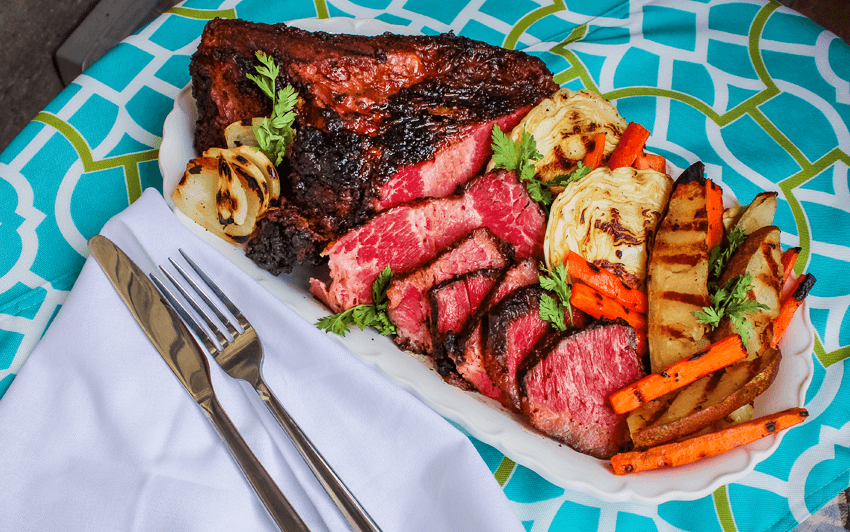
Smoked Corned Beef
Try this recipe for Wet Cured Corned Beef and experience the joy of making your own.

How to Cure Meat Safely
The easiest way to figure out your cure ratios is to search for a Universal Equilibrium Cure Calculator or a Universal Cure Calculator online. They run on the basis below, doing the math for you, and are an easy way to ensure good results. The guidelines for safely creating a cure are as follows:
- Salt should be Kosher; go with the brand used in the recipe if specified. Salt is calculated by multiplying the weight of the meat in grams by 2.5%.
- Cure is usually Prague Powder #1 unless otherwise specified. It should be calculated by multiplying the weight of the meat in grams by 0.25%.
- Sugar is variable and can be white or brown, even molasses or maple syrup. The amount depends on the amount of sweetness you desire in a recipe and can vary from 1% to 3%. Multiply the weight of the meat in grams by 1 to 3%.
- Finally, water for your brine-cure, if you are going with a wet cure instead of using an equilibrium cure, will be 410 ml for every 1000 g of meat. Dissolve the cure ingredients into the water, along with any aromatics and flavourings desired.
Cleanliness is Key to Safety
Meat curing isn’t hard, but it does require discipline in cleanliness and temperature control.
- Sanitize Everything – Use food-grade plastic, glass, or stainless steel. Wash the container with hot soapy water, rinse, then disinfect with a bleach solution (30 ml per gallon of water). Rinse thoroughly again and then dry it with paper towels before you add the brine.
- Temperature Matters – Keep curing meats in a fridge set between 32°F and 39.2°F (0°C to 4°C). Anything warmer is a bacteria breeding ground, and anything colder halts the curing process.
- IF there is ANY doubt – Throw out your creation in case you have doubts about the product you have just created. Any mold, smells that seem rotted, or a grey or green tinge to the meat instead of pink, then toss and start again.
People Also Asked:
How do you Cure Meat Safely?
By following precise calculations set forth by the recipe or a cure calculator, ensuring that the environment in which the cure is occurring is sanitary, and proceeding with the cure for the prescribed time in a perfectly temperature-controlled environment, you can achieve a safe and delicious cured meat product.
How to Prevent Botulism in Cured Meat?
When one cures meat, they use a curing salt like Prague Powder or Tender Quick, as directed by the recipe – this will inhibit the growth of bacteria like botulism. Furthermore, keeping the meat being cured in a temperature-controlled environment that is no less than 32°F (0°C) and no more than 39.2°F (4°C) will ensure the cured meat being produced has the best chance of not producing botulism.
Does Curing Meat Make it Safe to Eat?
Cured meats have a much longer shelf life than raw meat, thanks to the preservation methods used. They still need to be purchased from reputable sources and properly stored, however, they are quite safe to eat.
Is it Safe to Can Cured Meat?
Canning home-cured meats is not a good idea and could lead to bacteria and unsafe conditions for the meat, leaving it inedible. It is best to store any cured meat in a safe manner and consume it within a reasonable amount of time. You can purchase professionally and commercially canned meats as they have gone through a rigorous safety and sanitary process.
Curing Meat at Home: A Delicious DIY Adventure
Part science, part art, and completely satisfying, the science of barbecue, learning how to cure meat safely in this Napoleon Grilling Guide is a great way to achieve something amazing. As long as you follow the directions and take the proper precautions, you will be well on your way to perfect pastrami in no time. Ready to get started? Grab your favourite cut, pick your method, and let’s get curing! Have you ever cured your own meats? How did it turn out? Share your stories and photos with us on social media like our Facebook and Instagram pages using the hashtags #NapoleonEats and #NapoleonGrills.
