
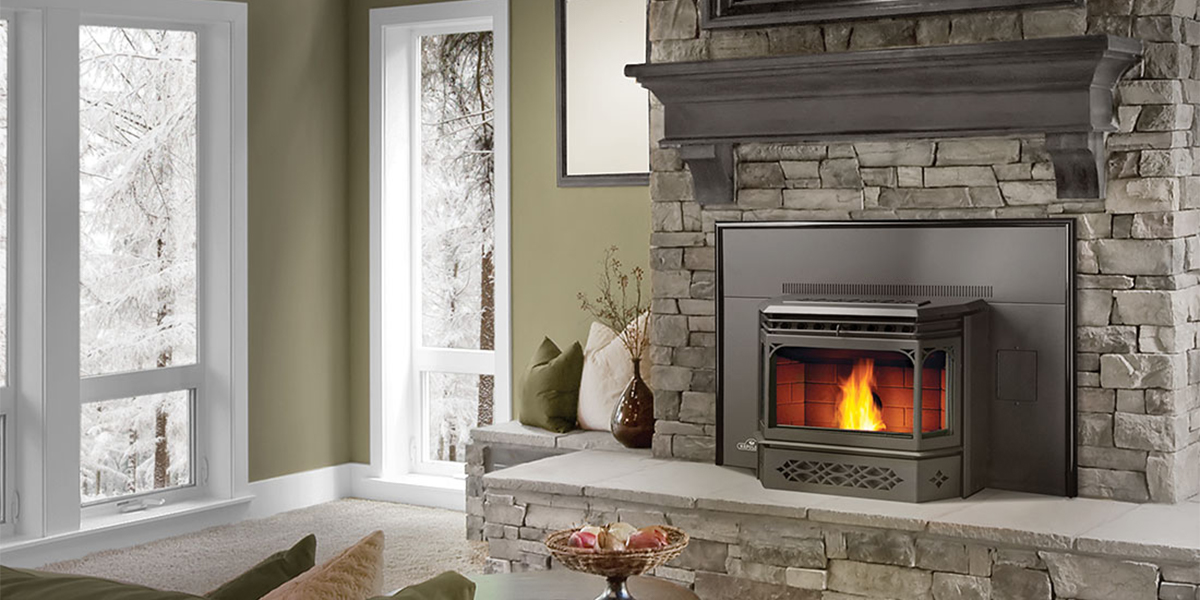
Moving Hot Air: How to Heat Your House Using Your Fireplace
During any winter season, extreme cold temperatures and heavy snowfall are common occurrences. For individuals with wood-burning or pellet-burning stoves, fireplaces, or inserts, these appliances often serve as valuable supplements or alternatives to traditional home heating methods. Mastering the art of heating your house using your fireplace involves comprehending airflow dynamics and exploring diverse solutions. By understanding your home's layout and implementing these tips, you can effectively maximize heat distribution while utilizing your fireplace as a heating source. Let's explore how to heat your house using your fireplace.
Where is the Best Place to Put a Fireplace?
To heat your house using your fireplace is not an exact science, but it starts with airflow. There are loads of ways to create airflow in your home, it is dependent, mostly, on the style of house you have. The best setup would be having your fireplace/stove/insert located on the main floor or main living area with a centralized location, or in an open-concept space. Or have a ranch-style house (long and sprawling), with the unit in the middle so you have two smaller wings to heat. Many people, for cleanliness reasons, opt for a basement installation of their fireplace/stove/insert especially if they are using a pellet or wood-burning model. This is where you may have an issue. But fear not! There are solutions, because sure hot air rises, but it needs a little bit of help.
Let's Get Moving - Cheap and Simple
If you have a forced-air heating and cooling system, turn on the fan and just use it to circulate the air that is created by your fireplace. This works best in more open-concept spaces and smaller homes where heat loss to the vents won’t be noticeable. If you have ceiling fans, reversing them so that the air is being pulled up is another way to circulate that heat. The moving air is pulled up, thrown against the ceiling, and then comes down the walls and is sucked back up again, much like a convection oven, only cozy with less cooking. This also works well if the fireplace is in a common and social area.

What do you do if you haven’t got a forced-air system to move the air around? There are several fan options that you can use, including fans that sit in the upper corner of doors, and even your big old box fan. Place the box fan on low, facing INTO the space where your fireplace is, blowing the cool air at the unit. This will cause a convection reaction and the hot air will be forced away from the burning unit. If in a small room, the hot air will be moving out the door into larger spaces in no time.
May Require Renos
If you’re still not getting the heat that you want, you may think about some minor renovations, like adding a pass-through vent over the burning unit, into the room above. This simple mod will allow the heat produced by your fireplace to simply flow upwards. In a ranch-style house, the long kind, adding transoms over the doors – those little windows but without adding glass – will allow for increased airflow. Doing this in conjunction with using ceiling fans or the home’s venting systems will make for a nice and warm home. Even better, you will add more light to your beautiful home if you choose to do this as well.
People Also Asked:
How Do I Heat My Whole House with a Fireplace?
Heating your whole house with a fireplace requires careful planning and consideration. One option is to install a fireplace insert, which is a stove-like unit that fits into your existing fireplace and provides more efficient heating. Another option is to use a wood-burning stove, which can be placed in a central location and connected to ductwork to distribute heat throughout the house. Additionally, you can use a combination of ceiling fans and strategically placed vents to help circulate warm air from the fireplace to different rooms. And finally, if you are installing a new fireplace, opting for heat management that allows fireplace heat to be directed into the rooms that need it most. Check out more information about Napoleon's Heat Management Systems.
Is a Fireplace a Good Way to Heat a House?
While fireplaces can provide cozy warmth and ambiance, they are not always the most efficient or cost-effective way to heat a house, especially if they are traditional open-hearth fireplaces. Open-hearth fireplaces can sometimes draw warm air out of the house and up the chimney, resulting in heat loss and higher energy bills. However, with proper installation and use of a more efficient fireplace insert or wood-burning stove, a fireplace can be a decent supplemental heat source for certain areas of the house.
How do I get the Best Heat From my Fireplace?
Ensuring any fireplace unit that you use is well-maintained and clean is the first step to getting the best heat from your fireplace. If you have an open-hearth, older masonry wood fireplace, you may consider upgrading to a fireplace insert, which will prevent drafts and heat loss from the home.
How Do You Circulate Heat From a Fireplace in Your House?
There are several ways to circulate heat from a fireplace throughout your house. One option is to use ceiling fans set to the reverse or clockwise direction to push warm air down from the ceiling and distribute it more evenly throughout the room. You can also install vents or ductwork to direct warm air from the fireplace to other rooms in the house. Additionally, using a fireplace insert or wood-burning stove with a blower fan can help to circulate heat more effectively by pushing warm air out into the room. Finally, keeping interior doors open and using fans to create airflow can help to distribute heat more evenly throughout the house.
To check on the effectiveness of moving hot air from one space to another, try taping a streamer or piece of toilet paper to the doorframe. If it’s moving, you have airflow. If not, other solutions may be necessary. Either way, it is possible to heat your home by moving hot air generated by wood or pellet-burning fireplace/stove/insert.